
This year brought significant updates to the educational practices undertaken by students at Teacher Training Colleges (ESFM). The most profound change occurred in the third year of training: now, in addition to planning and developing classes, student teachers must identify the pedagogical problem that will be the focus of their graduation project, a task that until recently was assigned to the fourth year.
As is often the case, the change came too late for teachers to adjust their classes and content. Faced with this unexpected challenge, at Alma we assumed the responsibility of adapting our sessions and materials, with the goal of providing students with the tools they need to confidently and clearly face this new challenge. Reaching the third year has now become one of the most challenging and enriching stages of teacher training. It is the moment when future teachers begin to understand more clearly what it means to teach, to transform lives from the classroom, and to view the school with the eyes of a researcher and the heart of an educator.
Today, student teachers not only plan and deliver lessons: they delve into a critical analysis of educational realities, using research tools such as surveys, interviews, and observation guides. Based on this data, they must identify problems present in the school context, in student performance, or in pedagogical practices. Once a problem is chosen, their mission is to design improvement proposals that they will implement during the next year of their training.
The challenge has only just begun, but powerful questions are already emerging from their classroom experiences: How can we support students who struggle with reading? How can we motivate adolescents? What causes these problems? Can we challenge teachers? These questions, born from observation and reflection, are the first step toward creative and innovative solutions.
Within this framework, the support we offer at Alma aims to ensure that each student not only learns to solve a pedagogical problem but also discovers how to leave a positive mark on the lives of their future students. Furthermore, we encourage them to develop a critical understanding of teaching practice, a difficult but necessary task that demands objectivity and the courage to look beyond the immediate and consider the changes that education truly needs.
We know that this process is not always reflected in the final documents, as academic demands and structure often limit the richness of the learning. However, we are convinced that this is where we must focus our greatest efforts. Because when we support a teacher in training, we not only strengthen their academic standing but also plant within them the seed of the educational transformation that our country needs.
By: Leydi Osorio Ramos
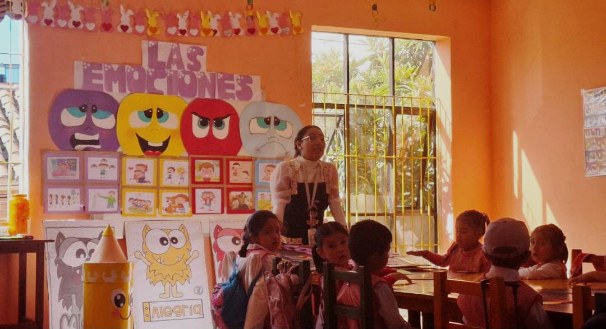
Student Anahí Chura applying strategies during her IEPC-PEC
Specialization: Early Childhood Education in the Family and Community